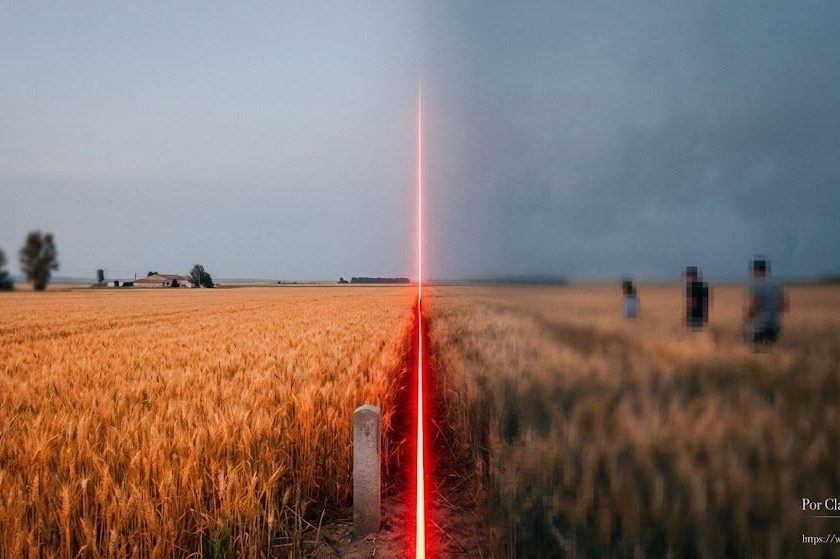
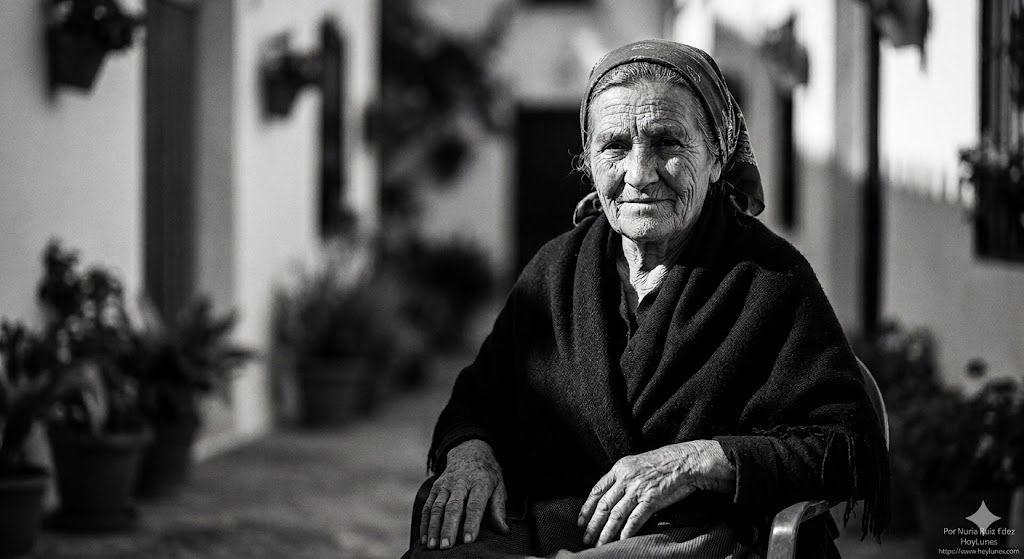
Beyond phonetics and social stigma, the Andalusian way of speaking asserts itself as a tool of pragmatic intelligence, collective memory, and identity dignity. An analysis of the expressive economy of the South, its place within the literary norm, and the cultural battle for a voice of its own that needs no subtitles.
By Nuria Ruiz Fdez
HoyLunes – There are debates that return once a year. The one regarding Andalusian speech is one of them. Studies change, headlines change, but the question persists year after year: what does it mean to speak in Andalusian?
I am Andalusian. And I do not say this as a geographic fact. I say it because it is the language in which I recognize myself.
A few days ago, the journalist Javier Jiménez analyzed a sound macro-atlas presented by the University of Granada and spoke of the “slow agony” of ceceo. He explained that it is an infrequent phoneme, that soft fricatives tend to dissolve, and that social stigma silently pushes many speakers to abandon it. His reflection was rigorous and broad, reaching beyond the Andalusian case. And he was right about something essential: languages change almost without us noticing.
But in Andalusia, we do not speak only of phonetics.
Ceceo is barely a brushstroke. It is identity. It is memory. It is dignity.
The Royal Spanish Academy (Real Academia Española) understands Andalusian as a way of speaking Spanish with its own features. That is to say, it does not consider it a distinct language, but rather a variety of the same language, with characteristics such as seseo, ceceo, or the aspiration of the /s/. In other words, the norm states that Andalusian is part of Spanish, not outside of it.

Correct. But insufficient.
Because Andalusian is not just a sum of phonetic phenomena. Andalusian is a way of looking. Of hinting. Of saying without fully saying. It is a way of being in the world with a half-smile and irony at the ready, should it be needed. There is an expressive economy that does not impoverish: it concentrates and enriches. Here, words are not wasted; they are refined. In Andalusia, one does not always speak quieter; one speaks more “from within”.
Andalusian often explains life without naming it. There is no need to say “I am exhausted”; a “estoy hecha polvo” is enough. There is no need to measure the exact amount: a “pechá” already places us in excess, in that which overflows. A “mijita” is not just a small portion: it is the delicacy of one who asks for little so as not to inconvenience. When someone has a gift, here it sounds like “ágel”, and it does not lose its purity by eating a consonant; on the contrary, it brings it closer.
An “illo” can be a warning or a caress. “Miarma” is not a vocative: it is a bridge stretched between two people who recognize each other. “¡Ozú!” does not describe: it reacts, it brings the hand to the chest before the dictionary. “Aro” is not just a “claro” (of course); it is nodding with complicity, as if to say: I follow you, I understand you, we are in this together. And that “no ni ná”, which would baffle formal logic, is actually a luminous, resounding affirmation. Negation becomes emphasis. Apparent contradiction turns into intensity.
And then there is the jartible, who is not simply insistent: it is that person who returns again and again, who does not let go, who presses where it hurts, who tires you out. Because Andalusian does not only communicate information; it communicates intention, temperature, distance, or closeness.
That is not “incorrectness”. It is pragmatic intelligence. It is knowing that meaning does not reside solely in the exact word, but in the tone, the gesture, and the silence that surrounds it. It is a way of narrating reality without the need to dissect it. And there, in that capacity to suggest more than what is pronounced, lies one of the greatest riches of Andalusian speech.
The problem was never linguistic. It was social.
For centuries, the Andalusian accent has been associated with lack of culture, articulatory laziness, or sloppiness. As if opening vowels were a sin. As if aspiring an /s/ were a moral failing. Modern linguistics is clear: inferior speeches do not exist. Persistent prejudices do.
And yet, how many children have learned to hide their accent upon crossing Despeñaperros? How many professionals have neutralized their voice so they would be taken seriously? There is no natural evolution there: there is induced shame.
In literature, the path has been complex. Luis de Góngora wrote within the refined norm of the Golden Age, even if his internal music had a Cordovan cadence. Gustavo Adolfo Bécquer did not transcribe Sevillian speech, but his melancholy had the spirit of the South. Antonio Machado knew how to listen to the popular voice without breaking academic spelling. And Federico García Lorca took the duende to a universal dimension without needing to request a linguistic safe-conduct.
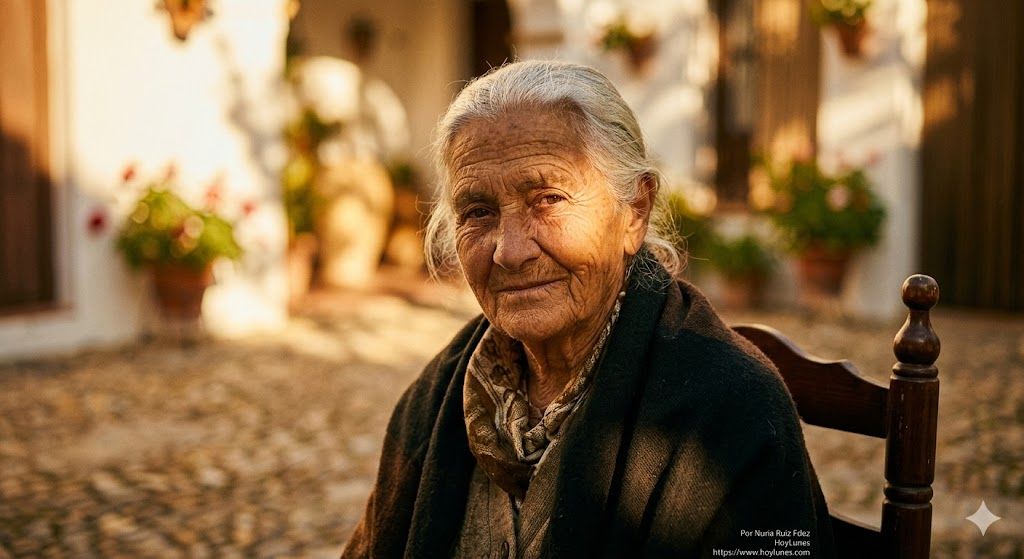
Later, Carlos Cano did something decisive: singing with an accent without apologizing. Not “in spite of,” but from within. Today, there are many Andalusian writers who have shown that the territory is not a backdrop, but a root. Antonio Muñoz Molina, Rosa Montero—though born in Madrid, deeply linked to the South in her work—, Felipe Benítez Reyes, Almudena Grandes—with Andalusian ancestry and a gaze toward the South—or Manuel Rivas have shown that origin leaves a mark, even when one does not write in dialect. I mean to say that it is not necessary to put “*miarma*” or aspire the “s” sounds on paper for Andalusian—this scent of the South—to be present in the text.
Increasingly, Andalusian authors choose to write without fully neutralizing their cadence. It is not costumbrism. It is consciousness. At that point, the old discussion about whether Andalusian is a language or a dialect loses some of its force. The border between both concepts is not just structural; it is political, cultural, and symbolic. Every language was once a dialect. Andalusian has no official recognition as an independent language. But it has internal coherence, tradition, millions of speakers, and an indisputable expressive power.
Perhaps the question is not whether it should become an official language. Perhaps the question is another: why do we still feel the need to justify it?
Returning to the macro-atlas and Javier Jiménez’s reflection: if a sound disappears because the language evolves, it is a natural process. But if it disappears because the speaker fears ridicule, then we are facing a symbolic loss.
And that truly hurts.
Speaking in Andalusian is not speaking “badly.” It is speaking from a specific history, from a land that has known how to mix cultures, open vowels, and turn irony into a survival mechanism. A “ya vé” can contain centuries of resignation and wisdom. A long, drawn-out “bueeeno…” can be an elegant disagreement. That subtlety is not taught in manuals, but it sustains human relationships.
Languages change. They will change. It may be that in a few decades, ceceo will be residual. It may not be. The decisive factor will not be the fate of a phoneme, but our collective attitude toward diversity.
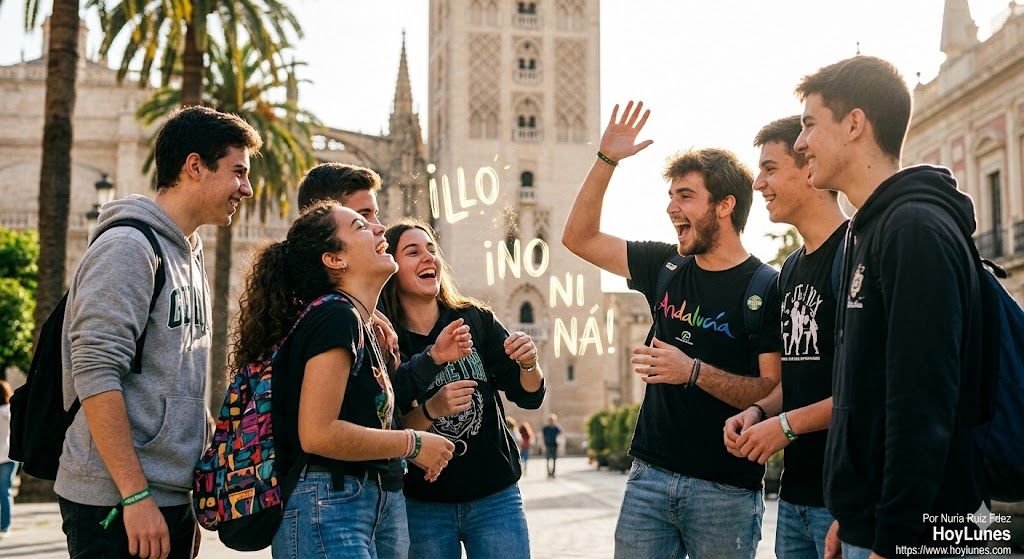
Spanish is not a compact block. It is a living territory, traversed by accents that broaden it. Andalusian is not a defective version of anything. It is a legitimate, complex, and profoundly creative way of inhabiting our common language.
I do not want my speech to ask for permission. I want it to sound. To breathe. To enter the school, the media, and literature—without being translated, without subtitles—to be valid.
Because when a voice defends itself, it does not only protect sounds. It protects memory.
And there, in that collective memory that we will not allow to be silenced, beats the true debate. Because as long as there is someone who speaks it and writes it without making excuses, Andalusian will remain alive and no one will be able to silence it.

#NuriaRuizFdez #HoyLunes #AndalusianIdentity #AndalusianSpeech #SouthernCulture #LinguisticPrejudice #LinguisticPride #Andalusia